As an electronics professional or manufacturer, you understand the critical role that power transformers play in your applications. These essential components are responsible for converting and regulating voltages, ensuring efficient power transfer, and providing electrical isolation. However, in many cases, off-the-shelf transformer solutions may not meet your specific requirements, leaving you in need of a custom-designed solution.
A standard transformer may work for general applications, but many industrial and electronic products need more precise electrical and mechanical specifications. For example, your equipment may require a special input voltage, dual secondary outputs, compact PCB mounting, low temperature rise, better insulation, or a specific housing size.
In applications such as smart meters, industrial control systems, medical devices, security systems, and power supplies, the transformer must fit the circuit design, safety requirements, and working environment. A custom power transformer helps you improve reliability, reduce assembly problems, and match your product design from the beginning.
At Unicreed Transformer, we specialize in designing and manufacturing high-quality, customized power transformers for a wide range of industries and applications. With our expertise and state-of-the-art facilities in China, we are well-equipped to guide you through the process of creating a custom power transformer that meets your unique needs.In this blog post, I’ll walk you through the steps involved in working with a custom power transformer manufacturer in China, highlighting the importance of choosing the right partner and the key considerations for a successful custom design.
How Unicreed Understanding Your Transformer Requirements?
The first step in the custom transformer design process is to clearly define your application’s requirements. This includes factors such as power ratings, voltage levels, frequency ranges, and environmental conditions in which the transformer will operate.
At Unicreed Transformer, we understand that every application is unique, and we take the time to thoroughly analyze your specific needs. Our experienced engineers will work closely with you to understand the intricacies of your project, asking detailed questions and gathering all the necessary information to ensure that the custom transformer design meets or exceeds your expectations
By clearly understanding your requirements from the outset, we can provide recommendations on the optimal transformer design, including core materials, winding configurations, and enclosure options, to ensure reliable and efficient performance in your application.
Before we start a custom transformer design, we usually ask customers to confirm the following information:
- Input voltage and frequency, such as 115V, 230V, 240V, or dual primary 115V/230V, 50/60Hz.
- Output voltage and current, including whether the output is AC or will be rectified to DC.
- Rated power or load condition, including continuous load, peak load, and duty cycle.
- Available installation space, PCB layout, pin position, mounting holes, or lead wire requirements.
- Ambient temperature inside the final equipment, not only the room temperature.
- Required insulation class, such as Class B 130°C or higher if the application needs it.
- Safety standard or target market, such as EN61558, UL, CE, CQC, or RoHS requirements.
- Special requirements such as low noise, low no-load loss, low temperature rise, vacuum potting, or short-circuit protection.
In my experience, many delays in custom transformer projects happen because the mechanical drawing or real load condition is confirmed too late. If the customer can provide the PCB layout, old transformer sample, application circuit, or target test standard at the beginning, we can usually reduce design changes during the sample stage.
Key Information You Should Prepare Before Customizing a Transformer
Before starting a custom power transformer project, it is helpful to prepare the key technical details in advance. This allows our engineering team to evaluate your requirements faster and provide a more accurate solution.
You can prepare the following information:
- Primary voltage and secondary voltage
- Rated power or VA value
- Working frequency, such as 50Hz or 60Hz
- Mounting type, such as PCB mount, chassis mount, or lead wire type
- Product size limitation
- Insulation class and safety requirements
- Operating temperature and working environment
- Quantity, target price, and expected delivery time
- Application, such as industrial control, medical device, electric meter, lighting system, or power supply
For example, if your transformer is used in an industrial temperature control system, stable output voltage and long-term reliability are very important. If it is used in a smart electric meter, compact size, low no-load loss, and stable insulation performance may be the key concerns.
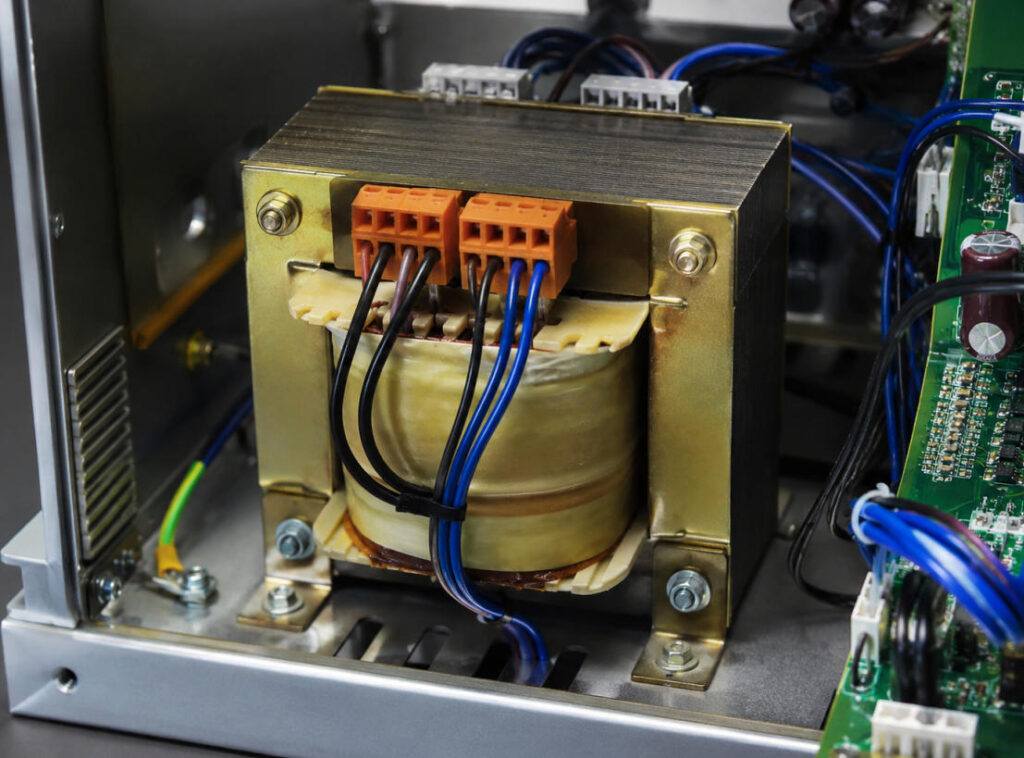
How To Custom Power Transformer Process at Unicreed?
1.Initial Consultation:
Our customization process begins with an in-depth consultation to understand your specific needs. During this phase, we discuss your technical requirements, the application environment, and any special features you may need in your transformers. This consultation helps us gather all the necessary information to design a transformer that perfectly meets your requirements.
2.Design and Prototyping:
Based on the initial consultation, our engineering team designs a prototype that meets your specifications. This stage involves rigorous testing and validation to ensure the prototype performs as expected. We use advanced design software and simulation tools to create accurate models and test them under various conditions.
During prototype validation, we do not only check whether the transformer can output the required voltage. We also check no-load voltage, full-load voltage, temperature rise, dielectric strength, insulation resistance, noise, and mechanical fitting.
In our production line, a prototype is useful only when it is tested close to the customer’s real working condition. For example, a transformer used in an industrial control cabinet may work at a much higher internal ambient temperature than expected. A transformer used near relays or metal housing may also need extra attention to magnetic noise and vibration.
For this reason, we recommend customers test the prototype in the final equipment before mass production. If the transformer is used with rectifier and capacitor circuits, the full-load temperature rise test should be done with the real rectifier load, not only with a simple resistor load.
3.Material Selection:
Choosing the right materials is crucial for the performance and durability of the transformer. We carefully select high-quality materials that match the specific needs of your application. Our team considers factors such as thermal stability, electrical conductivity, and mechanical strength to ensure the materials used will provide optimal performance.
Material selection affects not only cost, but also temperature rise, insulation reliability, noise, and production consistency. For low-frequency transformers, we normally review lamination size, copper wire diameter, bobbin material, insulation tape, varnish, resin, and lead wire. For high-frequency transformers, ferrite core material, bobbin structure, winding sequence, triple-insulated wire, shielding, and creepage distance become more important.
At Unicreed, our product range includes encapsulated transformers, toroidal transformers, EI power transformers, high-frequency transformers, current sense transformers, and common mode chokes. For different transformer types, the material decision is different. For example, vacuum potting is useful when the customer needs better moisture resistance, mechanical protection, and stable insulation, but it also requires careful control of resin process and thermal stress.
4.Production and Quality Control:
Once the prototype is approved, we move into full-scale production. Our production process is highly efficient and incorporates stringent quality control measures at every stage. We conduct various tests, including electrical, thermal, and mechanical tests, to ensure each transformer meets our high standards.
In transformer production, quality control should be built into each process, not only checked at the end. In our factory, we pay attention to winding tension, turns count, soldering quality, insulation tape position, varnishing or potting condition, core assembly, pin alignment, and final electrical testing.
At Unicreed, electrical specifications are tested during production, including semi-finished product testing, hi-pot testing, finished product testing, appearance inspection, and OQC inspection before shipment. This process helps us reduce batch risk and keep production quality more consistent.
For OEM projects, we also suggest confirming the approved sample, drawing revision, label content, and packing method before mass production. These small details are important for repeat orders, distributor inventory, and after-sales traceability.
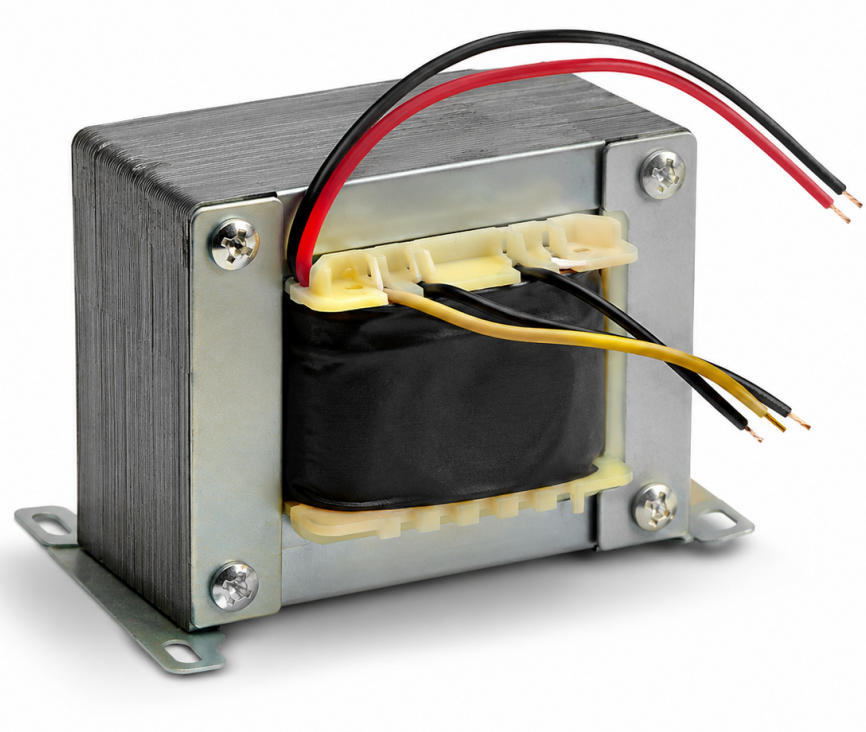
5.Testing and Validation:
Before the final product is delivered, it undergoes comprehensive testing and validation. We simulate real-world operating conditions to ensure the transformer will perform reliably in its intended environment. This thorough testing process helps us catch any potential issues before they become problems, ensuring the highest quality for our customers.
For custom power transformers, the test plan should be confirmed according to the application and safety requirement. Common test items include:
- No-load voltage and no-load current
- Full-load output voltage
- Temperature rise test
- Dielectric strength / hi-pot test
- Insulation resistance test
- Winding resistance test
- Short-circuit or overload protection check, when required
- Noise and vibration check
- Dimension and pin layout inspection
- Appearance and marking inspection
In my experience, no-load current and no-load loss are often ignored during early sourcing, but they are important for heat, standby consumption, and long-term reliability. A transformer that passes output voltage testing may still not be suitable if the no-load current is too high or the temperature rise is too close to the limit.
6.Delivery and Post-Sale Support:
Timely delivery is crucial, and we pride ourselves on our efficient production and logistics processes. We ensure that your order is delivered on time and in perfect condition. Additionally, our customer support team is always available to assist with any post-delivery questions or issues, ensuring complete satisfaction.
7.Value-Added Services:
At Unicreed Transformer, we strive to provide a comprehensive solution that goes beyond just the transformer itself. We offer value-added services such as custom labeling, packaging, and documentation to meet your specific needs.
Whether you require specialized labeling for identification or traceability purposes, or you need customized packaging solutions for safe transportation and storage, we have the capabilities to accommodate your requests.
8.Global Reach and Customer Support:
As a leading custom power transformer manufacturer in China, we have established a strong global presence, serving customers across Europe, India, Russia, Türkiye, Israel, and many other regions. Our extensive customer base is a testament to our commitment to quality, reliability, and exceptional customer service.
We understand that working with a manufacturer in China may raise concerns about communication and support. However, at Unicreed Transformer, we prioritize providing dedicated customer support throughout the entire design, manufacturing, and delivery process.
Our team is responsive to inquiries, offering technical assistance and guidance to ensure a seamless experience. We also provide comprehensive post-sales support, ensuring that you have access to the resources and expertise you need to maintain and optimize the performance of your custom transformers.

Why Choose Unicreed for Custom Power Transformers?
Unicreed is based in Xiamen, China, and has been working in the transformer field since 2008. Our production covers encapsulated transformers, toroidal transformers, EI power transformers, high-frequency transformers, current sense transformers, and common mode chokes.
For B2B customers, the key value of working with a factory is not only product supply. It is also engineering communication, sample modification, stable mass production, electrical testing, and batch traceability. In our factory, we treat custom transformer projects as an engineering process, not only as a purchasing order.
1.Expertise and Experience:
With years of experience in the industry, our team brings a wealth of knowledge to every project. We have successfully delivered custom solutions across various sectors, earning a reputation for excellence and reliability. Our expertise allows us to understand the unique challenges of different industries and provide solutions that meet those specific needs.
2.Top-Quality Products:
Quality is at the heart of everything we do at Unicreed. Our transformers undergo stringent testing procedures to ensure they meet the highest standards of performance and reliability. We use premium materials and advanced manufacturing techniques to deliver products that you can trust.
3.Customization Capabilities:
Every business has unique needs, and at Unicreed, we understand that. That’s why we offer extensive customization options, allowing you to tailor our transformers to your specific requirements. Whether you need a particular size, voltage, or performance characteristic, we can design and manufacture a transformer that fits your needs perfectly.
4.Global Reach:
We proudly export our products to Europe, India, Russia, Türkiye, and Israel, meeting and exceeding international standards. Our global reach is a testament to the trust and satisfaction of our international clients. By adhering to international standards, we ensure that our products are reliable and compliant with the regulations of the countries we export to.
5.Excellent Customer Support:
Our commitment to customer satisfaction goes beyond delivering a high-quality product. We provide outstanding customer service and technical support, helping you throughout the process from initial consultation to post-sale assistance. Our team is always ready to answer your questions and provide the support you need to ensure the success of your project.

Common Mistakes When Choosing a Custom Power Transformer Manufacturer
When choosing a custom power transformer manufacturer, the lowest unit price should not be the only decision factor. A transformer that looks similar in size and output voltage may have different temperature rise, insulation structure, no-load loss, noise level, and long-term reliability.
In my experience, these are the most common mistakes in custom transformer sourcing:
- Only providing output voltage and current, without explaining the real load type.
- Using V × I to calculate VA for a rectifier and capacitor load.
- Ignoring ambient temperature inside the final equipment.
- Confirming the mechanical size before checking temperature rise.
- Forgetting safety requirements until the product is close to certification.
- Not testing the prototype in the final device before mass production.
- Changing wire length, connector, or mounting direction after the drawing is approved.
- Comparing quotations without checking copper wire, core size, insulation class, and testing standard.
A reliable supplier should help you identify these risks before mass production. This is especially important for industrial control, security systems, HVAC equipment, elevator control, energy meters, and other applications where transformer failure can affect the complete device.
FAQ About Custom Power Transformers
1..What information should I provide for a custom power transformer?
You can provide input voltage, output voltage, current, power rating, frequency, size limitation, mounting method, safety requirements, and application details. If you have a drawing or old sample, you can also send it to our engineering team for review.
2.Can Unicreed customize transformers for PCB mounting?
Yes. We can support PCB-mounted transformers, encapsulated transformers, EI laminated transformers, high-frequency transformers, and other custom transformer types for electronic equipment.
3.Can I customize the secondary winding?
Yes. We can design single secondary, dual secondary, or multiple secondary windings according to your circuit requirements.
4.What industries use custom power transformers?
Custom transformers are widely used in industrial control systems, security systems, alarm systems, smart electric meters, medical devices, power supplies, elevator control systems, lighting systems, and household appliances.
Conclusion:
Choosing the right custom power transformer manufacturer is a critical decision that can significantly impact the success of your application. At Unicreed Transformer, we pride ourselves on our expertise, state-of-the-art facilities, and commitment to delivering high-quality, customized solutions that meet your unique requirements.
Whether you’re a manufacturer of industrial temperature control systems, security systems, process control equipment, or any other application requiring custom power transformers, we have the capabilities to design and produce a solution tailored to your needs.
Visit our website at www.unicreed-transformer.com or contact us at sales@unicreed-transformer.com to explore our products and services further. Our team of experts is ready to collaborate with you and leverage our expertise to create a custom power transformer that exceeds your expectations.
Don’t settle for off-the-shelf solutions that may compromise performance or reliability. Partner with Unicreed Transformer and experience the benefits of working with a dedicated custom power transformer manufacturer in China.