If you’ve ever dealt with power systems in medical devices, smart meters, or LED lighting, you know that performance and reliability are everything. But here’s something many overlook: the core material inside your toroidal transformer could be the reason your system runs either flawlessly or fails under pressure.
Core materials directly affect efficiency, heat generation, electromagnetic interference, and even the physical size of the transformer. Choose the wrong material, and you risk poor power regulation, overheating, or excess energy loss, especially in demanding environments.
That’s why I want to walk you through the critical role of core materials in toroidal transformers. As someone who works closely with engineers across industries, I’ve seen how the right material choice makes all the difference. Let’s break down what toroidal transformers are and why the core matters.
What Are Toroidal Transformers?
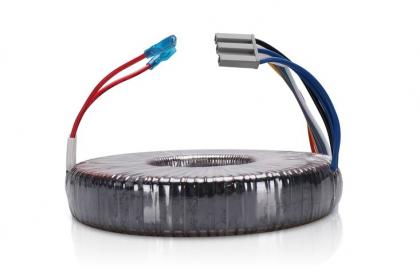
A toroidal transformer is a type of transformer with a doughnut-shaped magnetic core, typically made from materials like silicon steel or ferrite. The windings are wrapped evenly around the core, resulting in a closed-loop design. This structure allows for very low magnetic flux leakage and excellent efficiency. The toroidal shape also makes the transformer compact and easier to mount in tight spaces.
Key Applications
Toroidal transformers are used across many sectors where size, efficiency, and electrical noise reduction are essential. 5 keys application for our customers include:
- Industrial Control Systems: Provide reliable voltage regulation for controllers and automation systems.
- Alarm and Security Systems: Support sensitive detection devices with stable, low-noise power.
- Street-Lighting Controllers: Deliver efficient power for LED driver circuits in outdoor environments.
- Smart Electric Meters: Help reduce standby power loss while maintaining precise voltage control.
- Medical Devices: Reduce electromagnetic interference to ensure accurate diagnostics and safety.
Benefits Over Traditional Transformers
Compact Size
Toroidal transformers are physically smaller and lighter than conventional EI transformers with similar ratings. This makes them especially suitable for installations where space is limited, such as compact industrial enclosures or modern smart devices.
High Efficiency
Thanks to their circular core and symmetrical winding, toroidal transformers reduce core loss and limit stray magnetic fields. This results in greater energy efficiency and less heat buildup, which is essential for applications focused on energy savings and long-term reliability.
Low Electromagnetic Interference (EMI)
The closed-loop magnetic path helps to confine the magnetic field within the core, significantly lowering electromagnetic interference. This feature is vital for systems that operate near sensitive electronic components or rely on precise signal transmission.
Quiet Operation
The smooth and uniform magnetic field inside a toroidal transformer leads to minimal vibration and acoustic noise. This quiet performance is ideal for noise-sensitive environments like hospitals, residential buildings, and control rooms.
What Are Core Materials in Toroidal Transformers?
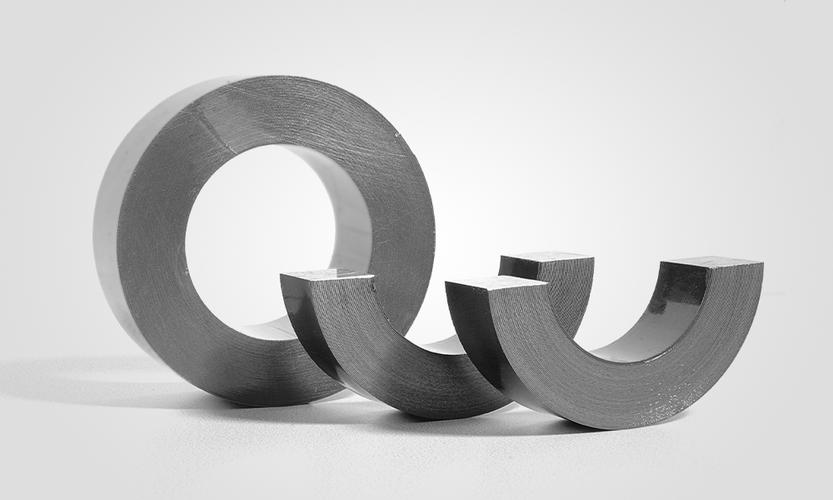
The core material in a toroidal transformer serves as the magnetic pathway that channels the magnetic flux created by the transformer’s windings. Its main function is to efficiently transfer energy from the primary to the secondary coil by maximizing magnetic coupling and minimizing energy loss. The properties of this material like permeability, saturation point, and electrical resistance greatly influence the transformer’s performance, especially in terms of efficiency and heat generation.
Overview of Common Core Materials
Silicon Steel
One of the most widely used core materials, silicon steel offers a good balance between performance and cost. It features high magnetic permeability and low core loss at 50/60Hz, making it ideal for industrial control equipment, lighting systems, and power supplies.
Ferrite
Ferrite cores are used in high-frequency transformers, such as those found in SMPS (Switch Mode Power Supplies). They offer excellent high-frequency performance and low eddy current losses but are more brittle and suited for lower power levels.
Amorphous Metals
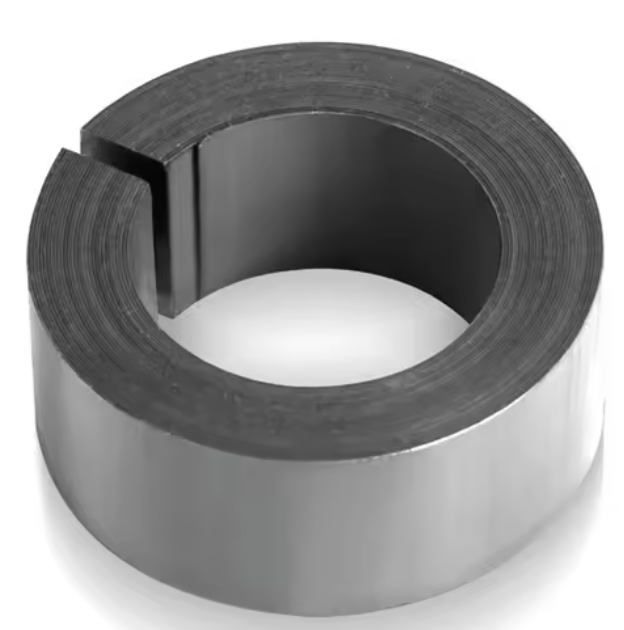
Amorphous cores consist of thin metallic glass ribbons that provide extremely low core losses, especially at no-load conditions. These are often used in energy-saving applications like smart meters and green lighting, where efficiency is a top priority.
Nanocrystalline
An advanced material offering very high permeability and low losses over a wide frequency range. Nanocrystalline cores are ideal for applications demanding high performance and compact size, such as medical devices and precision instruments.
Each material has unique properties that make it suitable for specific applications. Choosing the right core material is essential for achieving optimal performance, longevity, and energy efficiency in toroidal transformers.
How Core Material Affects Transformer Performance
Now that we’ve covered the types of core materials used in toroidal transformers, it’s time to look at why that choice matters so much. The core material directly shapes how a transformer performs under real-world conditions. From efficiency and thermal response to electrical noise and vibration, the physical and magnetic properties of the core have a measurable impact on both product quality and system reliability.
Efficiency and Core Losses
The efficiency of a transformer largely depends on how much energy is lost in the form of heat within the core. High-quality materials like amorphous metals or nanocrystalline alloys offer significantly lower core losses compared to traditional silicon steel. This translates into less heat generation, reduced cooling requirements, and longer transformer lifespan – especially important in energy-sensitive systems like smart meters and power-saving appliances.
Magnetic Properties
A core’s magnetic permeability, saturation point, and hysteresis behavior all influence the transformer’s inductance and stability. Materials with high permeability and low hysteresis loss allow for smooth magnetic flux transitions, leading to better regulation and faster response times. This is especially critical in industrial control, where precise voltage and current control is essential.
Thermal Stability
Toroidal transformers are often expected to operate reliably in high-temperature environments, such as near industrial machinery or inside sealed control cabinets. Core materials with strong thermal properties maintain their magnetic performance even at ambient temperatures up to 70°C. This ensures the transformer continues to perform consistently without risk of thermal degradation or failure.
Noise and Vibration
The physical structure of the core material affects how much noise and vibration the transformer produces. Poor-quality materials can generate unwanted hum or buzzing sounds due to core movement and magnetic flux leakage. Advanced materials like nanocrystalline alloys minimize electromagnetic interference (EMI), making them ideal for applications in medical devices, alarm systems, and sensitive electronic equipment where low noise is a priority.
Comparing A Core Materials and B Core Materials In Toroidal Transformer
Understanding how core materials influence toroidal transformers helps design engineers optimize for efficiency, size, and reliability across a range of applications. This side-by-side comparison focuses on A Core Materials and B Core Materials in the toroidal context, highlighting typical properties, trade-offs, and suitable use cases to guide material selection for different performance targets.
| Criterion | A Core Materials (typical options) | B Core Materials (alternative/advanced options) |
| Definition and role | Traditional ferromagnetic substrates around windings that guide flux and set baseline losses, saturation, and temperature behavior | Advanced or alternative magnetic materials engineered to reduce losses, raise permeability, or enable higher power density in compact geometries |
| Typical permeability range | High permeability in laminated silicon steel; ferrites vary by formulation and frequency; modest range overall | Very high permeability in some nanocrystalline and amorphous alloys; ferrites can approach targeted ranges with frequency-dependent behavior |
| Core loss characteristics | Hysteresis and eddy current losses depend on lamination, resistivity, and frequency; generally predictable with established data | Often lower core losses at key frequencies for amorphous/nanocrystalline materials; ferrites optimized for high-frequency efficiency; loss behavior can be more frequency-specific |
| Saturation flux density | Silicon steel tends to have high saturation; ferrites typically lower but adequate for many applications depending on mix | Some advanced materials maintain high effective permeability while offering favorable saturation margins; exact values depend on alloy, processing, and geometry |
| Frequency suitability | Broadly effective from low to mid frequencies; ferrites used for higher-frequency designs | Optimized for higher frequencies and compact designs; amorphous and nanocrystalline excel where space and efficiency are critical |
| Mechanical and thermal considerations | Proven manufacturability; robust winding with laminated cores; heavier for the same power at lower frequencies | Lighter and more compact designs; winding and handling can be more complex; cost and supply chain considerations often higher |
| Cost and availability | Widely available; cost-effective with mature supply chains | Higher material and processing costs; availability can be more variable depending on region and supplier |
| Typical applications (illustrative) | Industrial control power supplies, alarm systems, street-lighting drivers, general toroidal designs | High-efficiency or space-constrained applications; premium lighting drivers, compact control electronics, and scenarios requiring minimal losses and heat |
Why Core Material Matters in Your Toroidal Transformer Design
When designing a toroidal transformer, it’s easy to focus on dimensions, voltage ratings, and power output. But one factor often underestimated is the core material. In fact, the core material is one of the most critical elements influencing how your transformer performs in the real world. From energy efficiency to noise suppression, every detail starts at the core. Here’s why your choice of core material deserves careful attention in every stage of your design process.
1.It Directly Affects Energy Efficiency
Core materials with lower hysteresis and eddy current losses like amorphous and nanocrystalline alloys enable your transformer to operate more efficiently. This is particularly important in systems with continuous operation, such as smart meters, solar inverters, or industrial control panels, where every watt saved counts.
2.It Determines Thermal Performance
The right core material maintains stable magnetic performance under high ambient temperatures. In compact or enclosed installations like medical equipment or street-lighting systems, heat buildup is a serious concern. High thermal stability ensures that your transformer won’t fail or drift in performance under stress.
3.It Influences Electromagnetic Compatibility (EMC)
Toroidal transformers are known for low EMI, but the core material still plays a major role. Materials with good magnetic containment reduce stray fields and prevent interference with surrounding circuits. This is essential in sensitive applications like alarm systems and communication devices.
4.It Impacts Size and Weight
High-performance core materials can achieve the same power output in a smaller form factor. This allows more compact and lightweight designs, which are valuable in space-limited environments such as elevator controls or embedded systems.
5.It Affects Long-Term Reliability
Choosing a stable, high-quality core material means less degradation over time. This results in lower maintenance, fewer replacements, and longer life cycles for your end products key benefits for customers in demanding sectors like industrial automation and healthcare.
What Is Unicreed’s Strategy For Selecting Core Material?
With so many core materials available, each offering different performance benefits, it is important to have a clear strategy when selecting the right one for your toroidal transformer. The goal is not just to meet technical specifications but to optimize for performance, reliability, and cost based on your application. At Unicreed, we work closely with our customers to help them make the right material choices based on real-world needs. Below, I will walk you through the key factors I consider when guiding our partners.
1.Define Your Application Requirements
Start by understanding what the transformer is expected to do. Is it for a medical device that requires very low EMI? Or an industrial control system that must perform well in a high-temperature cabinet? Knowing the working environment, load condition, and operating hours helps narrow the options.
2.Evaluate Efficiency Needs
If your system must run efficiently with minimal heat, especially in continuous-use applications like smart meters or solar panels, materials such as amorphous metal or nanocrystalline are often the best choice. At Unicreed, we offer custom solutions using these materials to meet high-efficiency standards.
3.Consider Frequency Range
Your core material must match the frequency your system operates in. Ferrite is best for high-frequency switching power supplies, while silicon steel suits standard low-frequency applications. Choosing the right material avoids excess losses and ensures long-term stability.
4.Balance Size and Performance
If you need a compact transformer for a device such as a control board or alarm panel, choose materials with high magnetic permeability. These allow for smaller, lighter designs without sacrificing performance. Unicreed supports compact designs with premium material selection and tight winding control.
5.Assess Noise Sensitivity
For applications in quiet environments like hospitals or residential spaces, it is essential to reduce electromagnetic noise and vibration. High-quality materials and precision winding, both of which we provide at Unicreed, help meet strict noise control requirements.
6.Factor in Budget and Production Volume
If your project needs to balance cost and performance, especially in large-volume production, silicon steel or ferrite can be good options. At Unicreed, we help you select the most economical material that still meets your reliability standards.
How to Choose the Right Core Material in Toroidal Transformer
In toroidal transformer design, core material selection is not a one size fits all decision. The circular shape of a toroidal core already provides benefits like compact size and low electromagnetic interference. However, the material you choose can either enhance these advantages or introduce limitations. At Unicreed, we support our customers by evaluating the full scope of their design needs. From electrical efficiency to space constraints, here are the key factors to consider when selecting the right core material for your toroidal transformer.
1.Determine the Operating Frequency
Your system’s frequency will guide your material choice. For low frequency applications such as 50 hertz or 60 hertz power systems, silicon steel or amorphous metal is well suited. For higher frequency designs such as switching power supplies, ferrite is more efficient because it limits energy loss at faster cycles.
2.Identify Efficiency Requirements
If your design prioritizes energy savings and continuous operation, materials with low core loss are essential. Amorphous and nanocrystalline cores offer strong energy efficiency by reducing heat buildup. These are especially useful in smart meters, solar inverters, and any system that runs for extended hours.
3.Evaluate Thermal Conditions
Toroidal transformers often operate inside closed panels or machines that generate heat. In these conditions, your core must maintain magnetic performance without overheating. Amorphous and nanocrystalline cores offer excellent thermal stability, which ensures consistent operation even at elevated temperatures.
4.Consider EMI and Noise Sensitivity
If your application requires low electromagnetic interference, the core material plays a key role. Ferrite and nanocrystalline materials contain magnetic fields more effectively, which reduces interference with surrounding electronics. This is critical in medical devices, audio systems, and alarm control units.
5.Size and Weight Limitations
For space restricted installations such as embedded controllers or smart lighting modules, transformer size matters. Materials with high magnetic permeability allow you to achieve the required power in a smaller core. This helps reduce the overall size and weight of the device without compromising performance.
6.Balance Cost and Performance
Not every application needs the most advanced material. For general purpose systems or cost sensitive designs, silicon steel offers good performance at a lower price. At Unicreed, we help customers match the right material to their technical requirements and budget goals.
Conclusion
As we’ve seen, the core material in a toroidal transformer is not just a technical detail; it is a performance driver. From energy loss and magnetic interference to temperature resistance and long-term reliability, the right core material makes all the difference. Whether you are designing for precision in medical devices or efficiency in smart meters, these choices directly impact how well your system performs in the real world.
That is why working with an experienced transformer manufacturer like Unicreed matters. I do not just offer transformers; I help engineer solutions tailored to your industry, your environment, and your exact performance requirements. With over 13 years of expertise, premium materials from trusted global suppliers, and strict quality control, Unicreed helps you get it right from the inside out.
If you are looking to optimize performance, reduce failures, and meet industry standards with confidence, let us talk.